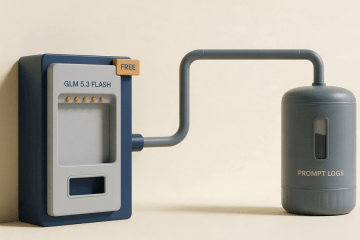
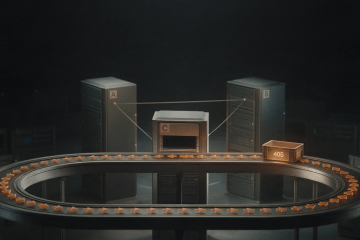
MinIO delete-marker convergence: how the Silo fork fixed the 405 replication loop
The 405 storm had three root defects in the delete-marker path. PR #162 fixed the first attempt; PR #184 fixes retries, purge status and MRF healing in the Silo fork.
The value of the target depends on a platform you cannot inspect from the data room. I give investors, buyers and diligence teams an independent read on scalability, reliability, technical debt and the infrastructure cost curve after the deal closes.
A new platform, a capacity uplift, a migration or a hardware purchase. I size the system against the real workload and check the vendor proposal against what the equipment actually delivers, before the budget is signed.
Spark jobs miss their window. AI training waits on storage. Latency moves without a clear cause. The platform has become the constraint, and internal diagnosis has run out of road.
An architecture choice, a re-platforming, a vendor commitment. Your team has a view. An independent read tests it against the evidence and names the trade-offs nobody has written down yet.
Most reviews stop at a product boundary or a team boundary. Mine do not. Depending on the question, the investigation moves through application source code and algorithms, data models, distributed processing engines, databases and messaging systems, Kubernetes and scheduling, networking, object and block storage, operating system and infrastructure configuration, server architecture, drive specifications, and the capacity plan or vendor quote behind the purchase.
That range matters because the answer is rarely where the alert is. A slow Spark stage can be a shuffle problem, a scheduler problem, a network path problem or a drive that never delivered its rated IOPS under this access pattern. Reviewing one layer at a time produces a partial diagnosis, a local optimization that moves the bottleneck somewhere else, or a capacity plan that buys hardware you did not need.
Working across the stack also ends the argument. When application, platform, infrastructure, operations and vendor teams each hold a plausible theory, an independent read that covers all five is the fastest way to a decision everyone can act on.
From €7,500 excl. VAT
A full review of a complex data, cloud or AI platform, ending in a ranked diagnosis, a cost and capacity model, and a roadmap your team can execute.
From €4,500 excl. VAT
An independent technical read for investors, buyers and leadership teams before an investment, an acquisition or a strategic platform commitment.
From €4,500 excl. VAT
One decision, one bottleneck or one component reviewed in depth. Or an evidence-based sizing of a new deployment, a capacity uplift or a migration, down to instance types and server configuration.
From €3,000 excl. VAT / mo
Recurring senior review for teams running complex infrastructure. Architecture challenge, incident analysis and roadmap input, without a full-time principal engineer.
€250 excl. VAT / 1h
One focused session on one question. The fastest way to get an external read.
Most disaster recovery plans are written once and validated on paper. The architecture looks sound, the RTO and RPO targets are stated, the document passes review. Then a real failure arrives and the replication lag, the restore throughput, the dependency nobody mapped or the runbook step that assumes a healthy control plane turn a four-hour target into a two-day outage.
I review high availability and recovery design as an engineering problem. Failure scenarios and blast radius. Replication topology and consistency under partition. Backup integrity and measured restore throughput against the data volume you actually hold. Dependency order during recovery. Whether the stated RTO and RPO are reachable with the infrastructure in place, and what it would take to reach them if they are not.
Before implementation, this catches the design choices that make the target unreachable. After implementation, it verifies that the document describes what actually runs.
I am Julien Laurenceau. I hold a PhD in numerical optimization and high performance computing, and I have spent more than 20 years building and fixing complex systems: multi-petabyte data lakes, banking infrastructure, telecommunications platforms, private cloud environments, satellite imagery pipelines and aerospace systems.
I work alone and I sell no implementation, no licenses and no hardware. Nothing in my conclusions depends on what you buy next.
A 15-minute introductory call, no charge and no commitment. Bring the decision, the incident or the number that does not add up. We will establish whether an independent review helps and which engagement fits.
The 405 storm had three root defects in the delete-marker path. PR #162 fixed the first attempt; PR #184 fixes retries, purge status and MRF healing in the Silo fork.
MinIO Community Edition has had no release since October 2025 and the repository is archived. Three CVEs will never be patched there. Here is how to assess what your cluster is actually exposed to, and where the maintained community fork fits in.
Two movements meet: AI is getting production responsibilities, and production data is flowing through AI. Anthropic's September report, malicious routers, training data provenance and model drift show what to verify before an AI reaches production.