Why Your GPU Infrastructure Costs 40% More Than It Should
Most AI infrastructure teams spend 35-60% more on GPU compute than they need to. The cause isn’t cloud pricing. It is architecture, and it is fixable.
Spark sets executor CPU requests equal to limits, so a Kubernetes cluster reserves twice the CPU it uses and refuses to schedule pending pods. Kubernetes has no native overcommit. Here is the mutating-webhook operator I use to fix it.
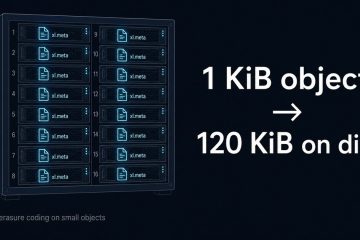
Two MinIO platforms, same root cause: used as a NoSQL store. Field notes on LIST IOPS, XFS directory limits, scanner & heal SLAs, the erasure-coding storage-efficiency inversion on small objects, and why Apache Cassandra (or Ceph) is the right answer on-prem in 2026.
When Tesla published patent WO2024073080 describing a new file format internally called “.smol”, the headline was simple: 4x reduction in IOPS for AI training. Most people read this as a hardware story. It isn’t. It’s a data architecture story. And it exposes a structural weakness in how most enterprise data Read more
GPUs are no longer the bottleneck. Data movement is. The bottleneck in AI infrastructure has moved from compute to data movement. The claim was articulated in an online talk I attended recently, and it matches what I have seen for years across very different systems: raw compute stops being the Read more