
ceph
Ceph in Production: RBD, RGW and CephFS
A field guide to Ceph in production: which surface serves which workload, what failure domains cost in replicas, how the upgrade lifecycle really rolls back, and what key rotation does not do.
A field guide to Ceph in production: which surface serves which workload, what failure domains cost in replicas, how the upgrade lifecycle really rolls back, and what key rotation does not do.

GPU cost optimization starts with useful work, latency and paid capacity. A measurement-led review of data stalls, inference sizing, sharing and cost attribution separates removable spend from capacity gains.

Spark sets executor CPU requests equal to limits, so a Kubernetes cluster reserves twice the CPU it uses and refuses to schedule pending pods. Kubernetes has no native overcommit. Here is the mutating-webhook operator I use to fix it.

Introduction Benchmarking remains a critical (and often underestimated) tool when designing or validating large-scale data platforms. While many teams rely on synthetic workloads or production replays, standardized benchmarks still play a key role when comparing architectures, tuning clusters, or validating infrastructure choices. TPCx-HS is one of those benchmarks: designed to Read more
RBD mirroring in production is one of the patterns I audit and design: Ceph storage consulting. Alpha Feature in Production… Good Idea? The most promising approach, journal-based mirroring, offers near real-time replication and faster failover. However, it’s currently an alpha feature in the Ceph CSI driver and relies on rbd-nbd, Read more
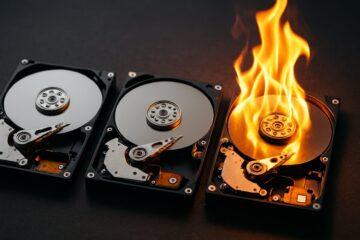
Choosing a PVC backend is an architecture decision I review; the Ceph storage consulting page describes the cluster side. Most discussions about PVC focus on on-prem deployments, but many of these technologies are equally relevant in the cloud, especially when using managed block storage like AWS EBS, which caps at Read more