
AI
Transcribe 100 Hours of Podcasts with whisper.cpp
I used whisper.cpp on an RTX 5070 to transcribe about 100 hours of podcasts in roughly three hours, then turned the Markdown output into a searchable prompt knowledge base.
I used whisper.cpp on an RTX 5070 to transcribe about 100 hours of podcasts in roughly three hours, then turned the Markdown output into a searchable prompt knowledge base.
Local inference gives control over weights and configuration, not a guarantee of political neutrality. A practical guide to evaluating framing, sizing KV memory and enforcing hybrid routing boundaries.

OpenRouter put numbers on a pattern agent builders already use: a panel of models with a judge synthesizer beats the best single model, and a budget panel matched frontier quality at half the cost. What that means for your AI platform.

A small coding model mocked on r/LocalLLM is actually a clean case of execution-verified distillation. Here is how the method works, when distilling a frontier model into a cheap local one pays off, and the three things the hype leaves out.
GPU cost optimization starts with useful work, latency and paid capacity. A measurement-led review of data stalls, inference sizing, sharing and cost attribution separates removable spend from capacity gains.

When Tesla published patent WO2024073080 describing a new file format internally called “.smol”, the headline was simple: 4x reduction in IOPS for AI training. Most people read this as a hardware story. It isn’t. It’s a data architecture story. And it exposes a structural weakness in how most enterprise data Read more
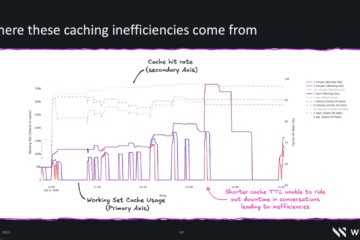
GPUs are no longer the bottleneck. Data movement is. The bottleneck in AI infrastructure has moved from compute to data movement. The claim was articulated in an online talk I attended recently, and it matches what I have seen for years across very different systems: raw compute stops being the Read more