object storage
Object Storage for Data Platforms at Scale
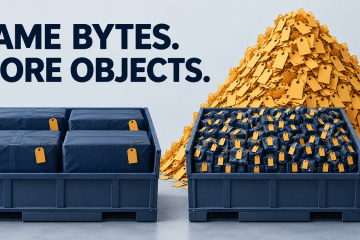
Size an object store against bytes, object metadata, request demand and maintenance time. A practical worksheet for small files, retention, erasure coding and release-channel choices.
Size an object store against bytes, object metadata, request demand and maintenance time. A practical worksheet for small files, retention, erasure coding and release-channel choices.

The 405 storm had three root defects in the delete-marker path. PR #162 fixed the first attempt; PR #184 fixes retries, purge status and MRF healing in the Silo fork.

MinIO Community Edition has had no release since October 2025 and the repository is archived. Three CVEs will never be patched there. Here is how to assess what your cluster is actually exposed to, and where the maintained community fork fits in.

During a MinIO replication incident three of the signals you reach for mislead you. The 405 on HeadObject is the success path, a retried 429 is invisible, and worker queue overflow logs nothing under the default priority. The counter that tracks dropped objects is incremented in four places and read in none.
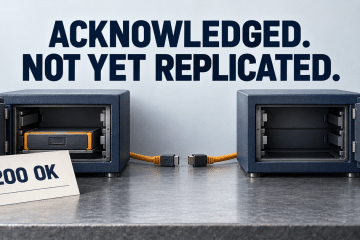
A successful source PUT does not establish a recoverable peer copy. Separate MinIO site-replication acknowledgment, persisted retry state and catch-up capacity before committing to an RTO or RPO.
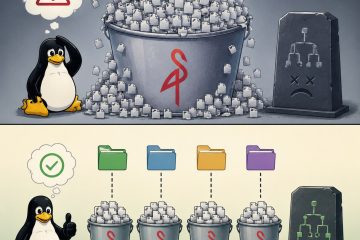
MinIO has no NameNode. It puts the namespace on XFS as real directories and xl.meta files. On Lots of Small Files that means you can exhaust inodes while df -h still looks fine, and a flat leaf can stall PUT, LIST, scanner, and ILM together. Here is the on-disk model, the inode math, and a prefix recipe that keeps XFS inside a regime you can operate.

MinIO was not built for Lots of Small Files (LOSF). No global index, no read repair, and a scanner that can take weeks to notice silent corruption. Here is what breaks, why tiering makes it worse, and when you should use a database instead.
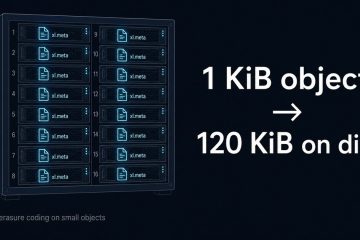
Two MinIO platforms, same root cause: used as a NoSQL store. Field notes on LIST IOPS, XFS directory limits, scanner & heal SLAs, the erasure-coding storage-efficiency inversion on small objects, and why Apache Cassandra (or Ceph) is the right answer on-prem in 2026.
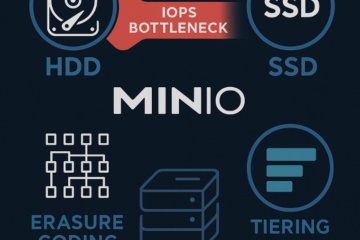
Hidden storage costs are one of the targets of a data platform cost optimization review. Bring the IOPS dude ! As a solutions architect working with MinIO storage solutions, I’ve seen firsthand the challenges that come with on-premises deployments using hard disk drives (HDDs). While HDDs may seem like a Read more
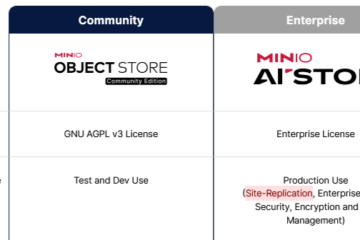
Beware the AGPL! you may end with a product orphan from its S3 storage… MinIO has long been a popular open-source S3-compatible storage solution, but their strategy has shifted dramatically, especially since the release of their new AIstor product, now positioned as their main enterprise S3 offering. Over the past Read more