
RTO and RPO are business constraints expressed as engineering targets. They are not properties that an architecture diagram acquires because a document names them. A data platform meets an objective only when the complete recovery path produces measured evidence under the failure scenarios that matter.
The NIST Contingency Planning Guide defines the recovery point objective as the point in time to which data must be recovered after an outage. It defines the recovery time objective as the time an information system can remain in recovery before the outage harms the mission or business process. The definitions are short. Proving them is not.
Do not blend RTO and RPO into one promise
Do not blend RTO and RPO into one promise, because a platform can meet one and still fail the other. RPO asks how far back recovered data may be and is proven by the last durable recovery point, replication lag and a reconciliation result. RTO asks how long recovery may take and is proven by a timed path from declared start to verified service restoration. Test and report them separately.
| Objective | Question it answers | Evidence I expect | Common false proof |
|---|---|---|---|
| RPO | How far back can recovered data be? | Last durable recovery point, replication lag and data reconciliation result | A backup job completed successfully |
| RTO | How long can recovery take? | Timed path from declared start to verified service restoration | A standby server started |
A replica that starts in five minutes may contain data older than the RPO. A backup that contains every committed record may take twelve hours to restore. Availability, recoverability and data currency overlap, but they are not the same metric.
Build a failure matrix before choosing the test
Build a failure matrix before choosing the test, because one successful restore does not validate every disaster and the test must match the failure boundary that the objective covers. Name each failure scenario you claim to survive, from single data node loss to control-plane loss, then pair it with the recovery path to test and the evidence to expect. The matrix forces the objective, mechanism and evidence to share the same failure boundary.
| Failure scenario | Recovery path to test | RPO evidence | RTO evidence |
|---|---|---|---|
| Single data node loss | Replica or shard recovery while service stays online | No acknowledged data missing | Time to restore redundancy and normal service margin |
| Availability zone loss | Traffic shift, dependency failover and replica promotion | Last durable record at the surviving site | Detection through verified application service |
| Network partition | Write behavior on each side, fencing and reconciliation | Lag and conflict outcome during the partition | Time to safe service, not merely connectivity |
| Region or site loss | Alternate-site activation and full dependency sequence | Backup or replica recovery point | End-to-end business service recovery |
| Control-plane loss | Credential, DNS, orchestration and configuration recovery | Configuration and secret recovery point | Time until operators can execute the data recovery path |
Chaos experiments and DR rehearsals answer different questions
Chaos experiments and DR rehearsals answer different questions: chaos engineering does not have to mean random failure injection. A good experiment is hypothesis driven and can test a precise partition, dependency loss or node failure. It is useful for checking whether the running system preserves an expected steady state.
A disaster recovery rehearsal has a different finish line. It measures the complete path from the agreed clock start to a verified business service, including decisions, credentials, DNS, certificates, dependency ordering, restore throughput, data reconciliation and client acceptance tests. I use both. I do not treat one as proof of the other.
Measure the complete recovery clock
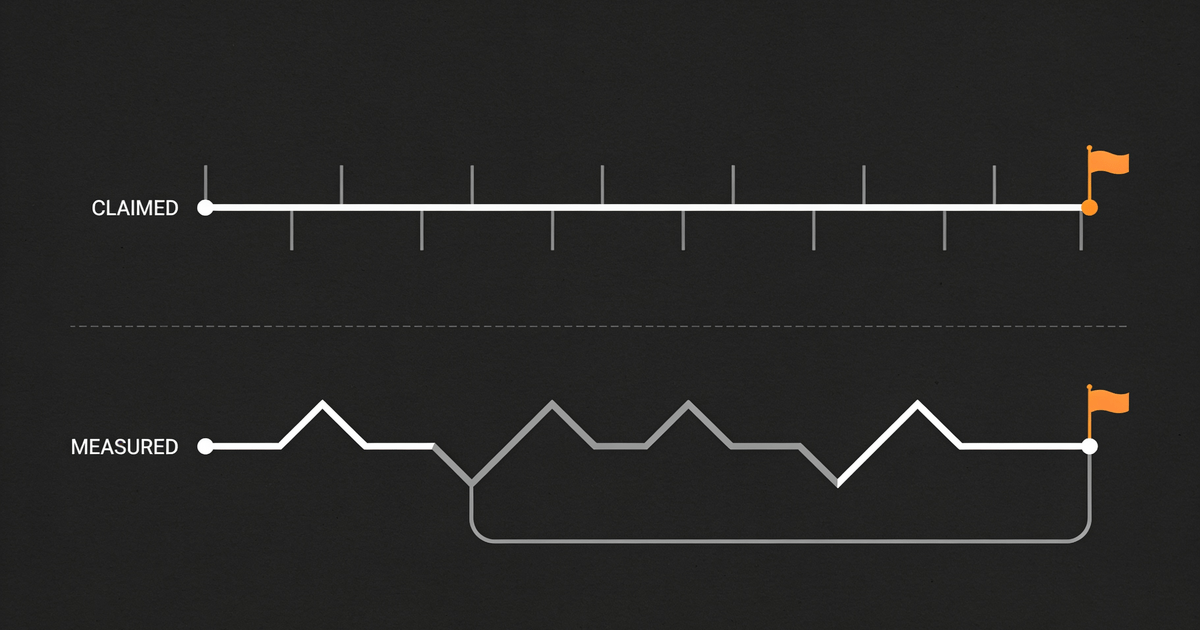
Measure the complete recovery clock from a declared start event to verified service, because only the measured path can support an RTO verdict. A complete clock names the start event, includes human decisions like escalation and access approval, records real restore throughput and dependency order, validates the data rather than trusting an exit code, and ends only when representative clients can complete critical operations. The documented path usually omits waiting, failed prerequisites and validation.
- Declare the start event. Hardware failure, monitoring alert, incident declaration and recovery authorization are different timestamps.
- Include human decisions. Escalation, access approval, vendor support and failover authority consume real time.
- Measure real throughput. Restore GB per hour from the production backup path, including decryption, decompression and validation.
- Record dependency order. Identity, secrets, networking, DNS, certificates, databases, brokers and applications rarely recover in one step.
- Validate data. A process exit code is not proof that the recovered dataset is complete and usable.
- End at service verification. The clock stops when representative clients can complete critical operations and monitoring confirms stable behavior.
Keep an evidence packet, not a pass or fail label
Keep an evidence packet, not a pass or fail label, because a useful rehearsal leaves enough evidence for another engineer to reproduce the verdict. The packet records the scenario and exclusions, the clock definition with a timestamped event log, backup age, replication lag and restore throughput, commands and configuration versions, validation queries, measured RTO and recovery point, remaining uncertainty, and corrective actions with owners and a retest date. A recovery result expires as systems change.
- Scenario, assumptions, exclusions and target RTO and RPO.
- Clock definition and timestamped event log.
- Backup age, replication lag and restore throughput.
- Commands, automation output and configuration versions.
- Data validation queries and client acceptance results.
- Observed dependency failures, manual work and vendor delays.
- Measured RTO, measured recovery point and remaining uncertainty.
- Corrective actions with owners and a retest date.

NIST places testing, training and exercises inside the contingency planning process and calls for scheduled validation as systems change. That matters for data platforms because a recovery result expires. Dataset growth changes restore time. New dependencies change ordering. Credential rotation can invalidate a runbook that worked six months ago.
Why independent validation matters
Independent validation matters because the implementation team should not be the only party defining the pass criteria and interpreting ambiguous results. The implementation team should help design and run the rehearsal. An independent review can test whether the target follows from the business impact analysis, whether the chosen scenario covers the claimed boundary and whether the evidence supports the conclusion.
Questions for the next design review
Take these questions to your next design review: what event starts the RTO clock, which write defines the measured recovery point, when the last full restore from the real backup path ran, how replication behaves during a partition, which dependencies recover first, what client operation proves service is restored, and what evidence would make a reviewer reject the claim. If the answers exist only in the architecture report, treat the objectives as unvalidated.
- What exact event starts the RTO clock?
- Which write defines the measured recovery point?
- When was the last full restore from the real backup path?
- How does replication behave during a partition or extended peer outage?
- Which dependencies must recover first, and who owns each step?
- What client operation proves that service is restored?
- What evidence would make the reviewer reject the current RTO or RPO claim?
If the answers exist only in the architecture report, treat the objectives as unvalidated. I review recovery designs, runbooks, measurements and rehearsal evidence through a Resilience and Disaster Recovery Assessment. Book a 15-min intro call to discuss the platform and the failure boundary you need to prove.
Primary guidance
- NIST SP 800-34 Rev. 1, Contingency Planning Guide for Federal Information Systems
- NIST SP 800-34 Rev. 1 PDF
Update 2026-09-29. This post is now part of Data Platform Resilience: RTO, RPO and Replication in Practice, the field guide to RTO, RPO and replication.
0 Comments